언어 : 한국의

한국의

 Automatic Battery Pack Assembly Line For ESS

Battery Capacity Grading Machine: The "Precision Quality Inspector" of the New Energy Battery Industry

February 27 , 2026
Battery Capacity Grading Machine: The "Precision Quality Inspector" of the New Energy Battery Industry


In the new energy battery industry, the battery formation and capacity grading cabinet plays a critical role in ensuring battery performance consistency and operational safety. Often referred to as the “precision quality inspector” of the battery production line, this equipment directly determines production efficiency and the reliability of end products.

With the explosive growth of electric vehicles and energy storage systems, quality standards for lithium batteries continue to rise. The technological advancement of formation and grading cabinets has therefore become a decisive factor in battery manufacturing competitiveness.

1. Core Definition: Technical Positioning and Key Functions

Technically, a battery formation and capacity grading cabinet is a high-precision testing system that integrates charge–discharge control, parameter measurement, and data processing.

Its primary function is to simulate real-world battery operating conditions through controlled charge–discharge cycles, accurately measuring critical parameters such as:
  • Actual capacity
  • Internal resistance
  • Charge/discharge characteristics
  • Voltage performance stability

Based on these test results, batteries are graded and classified to ensure consistency within the same production batch.


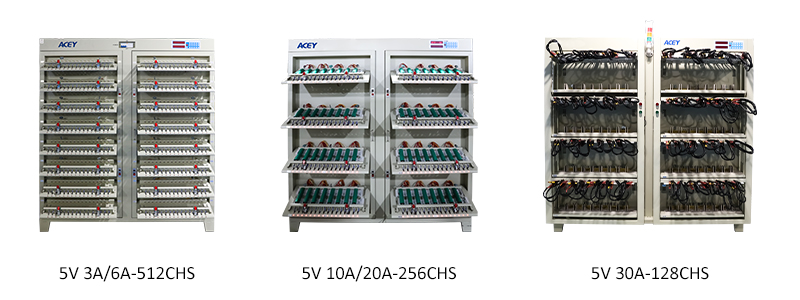
As a professional manufacturer of lithium battery testing equipment, we offer a high-precision Lithium Ion Cell Grading Machine designed for both mass production and laboratory applications. Our system integrates stable CC-CV charge control, multi-channel independent monitoring, and intelligent data management to ensure accurate cell grading and full production traceability.

Lithium Cell Testing Machine


Why It Matters

Due to variations in raw materials and manufacturing processes, individual cells inevitably exhibit performance differences. The formation cabinet eliminates underperforming or inconsistent cells, ensuring that only qualified and well-matched cells proceed to battery pack assembly.

This significantly reduces pack failure rates and enhances the reliability of downstream applications such as EVs and energy storage systems.

2. Technical Architecture: Modular Design and Core Working Principles

Modern battery formation cabinets adopt a modular architecture, typically consisting of the following core modules:

2.1 Power Module – The Energy Core

The power module provides stable charge and discharge output, supporting:
  • Constant Current (CC) charging
  • Constant Voltage (CV) charging
  • Constant Current discharging
  • Seamless CC–CV transition without disturbance

This ensures smooth, spike-free operation and protects battery structure integrity.

2.2 Control Module – The Intelligent Brain

The control system executes pre-programmed testing procedures with high precision.

Key capabilities include:
  • 64+ programmable working steps
  • Automatic step execution
  • Nested step configuration
  • Flexible testing strategy customization

This enables adaptation to complex testing requirements.

2.3 Detection Module – High-Precision Measurement System

Using high-accuracy sensors and a four-wire measurement method, the detection module performs real-time sampling of:
  • Voltage
  • Current
  • Temperature
  • Internal resistance

This ensures reliable and precise test data for grading and traceability.

2.4 Communication Module – Data Connectivity

Equipped with TCP/IP protocol or RS485 interface, the cabinet enables:
  • Real-time data upload to upper management systems
  • Remote monitoring
  • Centralized data management
  • Production traceability

This integration supports smart manufacturing environments.

2.5 Safety Protection Module – Multi-Layer Protection System

To ensure operational safety, formation cabinets integrate:
  • Over-voltage protection
  • Under-voltage protection
  • Over-current protection
  • Short-circuit protection
  • Power-failure data preservation
  • Optional fire suppression systems (high-end models)

Safety and data integrity remain top priorities in battery testing.

3. Key Technical Parameters: Core Performance Indicators

When evaluating a battery formation and grading cabinet, the following parameters are critical:

3.1 Voltage Specifications
  • Charging measurement range: typically 0V–4.5V
  • Discharge measurement range: typically 2.5V–5V
  • Resolution: 1mV

High measurement accuracy for precise voltage detection

3.2 Current Specifications
  • Standard output range: ±2000mA
  • Power cell models expandable up to 30A
  • Resolution: 1mA
  • High accuracy matching voltage precision

This ensures compatibility with various battery capacities.

3.3 Time Parameters
  • Inspection cycle time: < 2 seconds
  • Timer range: 0–9999 minutes per step
  • Data logging interval: ≥ 20 seconds

These parameters guarantee both real-time monitoring and complete data recording.

3.4 Channel Configuration
  • Production models: up to 512 channels for high-volume testing
  • Laboratory models: fewer channels but fully independent control per channel

This flexibility accommodates both mass production and R&D environments.

3.5 Environmental Adaptability
  • Operating temperature: 0°C–40°C
  • Within 25 ±10°C, accuracy drift ≤ 0.005% of FS /°C

This ensures stable performance across various manufacturing conditions.

4. Classification by Application Scenario


4.1 Production-Type Formation Cabinets


Designed for high-efficiency batch testing, these systems are further divided into:
  • Cylindrical / prismatic aluminum shell battery models
  • Polymer (pouch cell) models

The primary difference lies in fixture design:
  • Cylindrical/prismatic cells use upper and lower needle-contact fixtures
  • Polymer cells use gold-plated flat clamps to secure tabs

Production models emphasize:
  • High channel density
  • Unified current/voltage control
  • Fast grading efficiency
  • Large-scale manufacturing compatibility


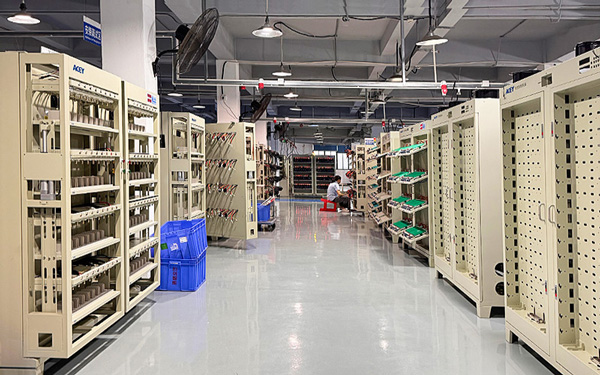
For large-scale battery manufacturers, our battery charge discharge test equipment supports high channel density and stable batch operation, ensuring efficient grading while maintaining strict consistency control across the entire production line.


Battery cell testing machine production workshop of ACEY


4.2 Laboratory / R&D Formation Cabinets

Laboratory models focus on precision and flexibility:
  • Fully independent channel control
  • Customized charge/discharge strategies
  • Wider current output range
  • 1–9999 programmable cycle tests

They are ideal for:
  • New battery material development
  • Process optimization
  • Advanced performance research
  • Detailed curve analysis


Industry Significance and Future Outlook

As a core testing system in the new energy battery industry, Lithium battery testing machine are deeply integrated with industry development.

From basic performance testing to intelligent adaptive systems, technological advancements in formation cabinets have:
  • Improved battery consistency
  • Enhanced pack safety
  • Increased manufacturing efficiency
  • Supported large-scale EV and ESS deployment

For battery manufacturers and equipment integrators, understanding the technical architecture and performance indicators of formation cabinets is essential for optimizing production and strengthening competitive advantage in the rapidly evolving new energy market.
메시지를 남겨주세요
메시지를 남겨주세요
If 당신은 우리의 제품에 관심이 있고 자세한 내용을 알고 싶다면 여기에 메시지를 남겨주세요, 우리는 가능한 한 빨리 회신 해 드리겠습니다.

제품

접촉

whatsApp